

Supporting Kids’ Dietary Needs at Thanksgiving
Thanksgiving is often centered around food, tradition, and big family gatherings. But for many of our kids, especially those with autism, sensory sensitivities, feeding challenges, or dietary restrictions, the holiday meal can be overwhelming instead of exciting.
If your child doesn’t eat turkey, stuffing, pumpkin pie, or most of what's on the table you’re not alone.
Families everywhere are learning to balance celebration with their child’s comfort, needs, and nutrition goals. This season can still be meaningful, joyful, and delicious, just in a way that works for your kiddo.

Why Thanksgiving Foods Can Be Hard
Traditional Thanksgiving dishes bring lots of:
Mixed textures (creamy + chunky)
Strong smells (spices, roasted foods)
New or unfamiliar flavors
Social pressure to “just try a bite”
Busy, noisy environments that heighten sensory input
For children with limited food preferences or sensory-based feeding challenges, these factors can be overwhelming. Their comfort and sense of safety around food matter, and sometimes forcing new foods can backfire.
Meeting Kids Where They Are Without Stress
Instead of focusing on what they can’t eat, center the holiday around what they can eat and enjoy.
It’s perfectly okay to:
Bring or prepare their safe foods
Serve familiar textures and flavors
Include their favorite plate, cups, or utensils
Have a calm eating space or sensory break area
Avoid comments like “just try it” or “one bite won’t hurt”
Kids feel secure when their needs are respected and security is the foundation for eventually trying new foods.
Ideas for Holiday Meals That Support Sensory Needs
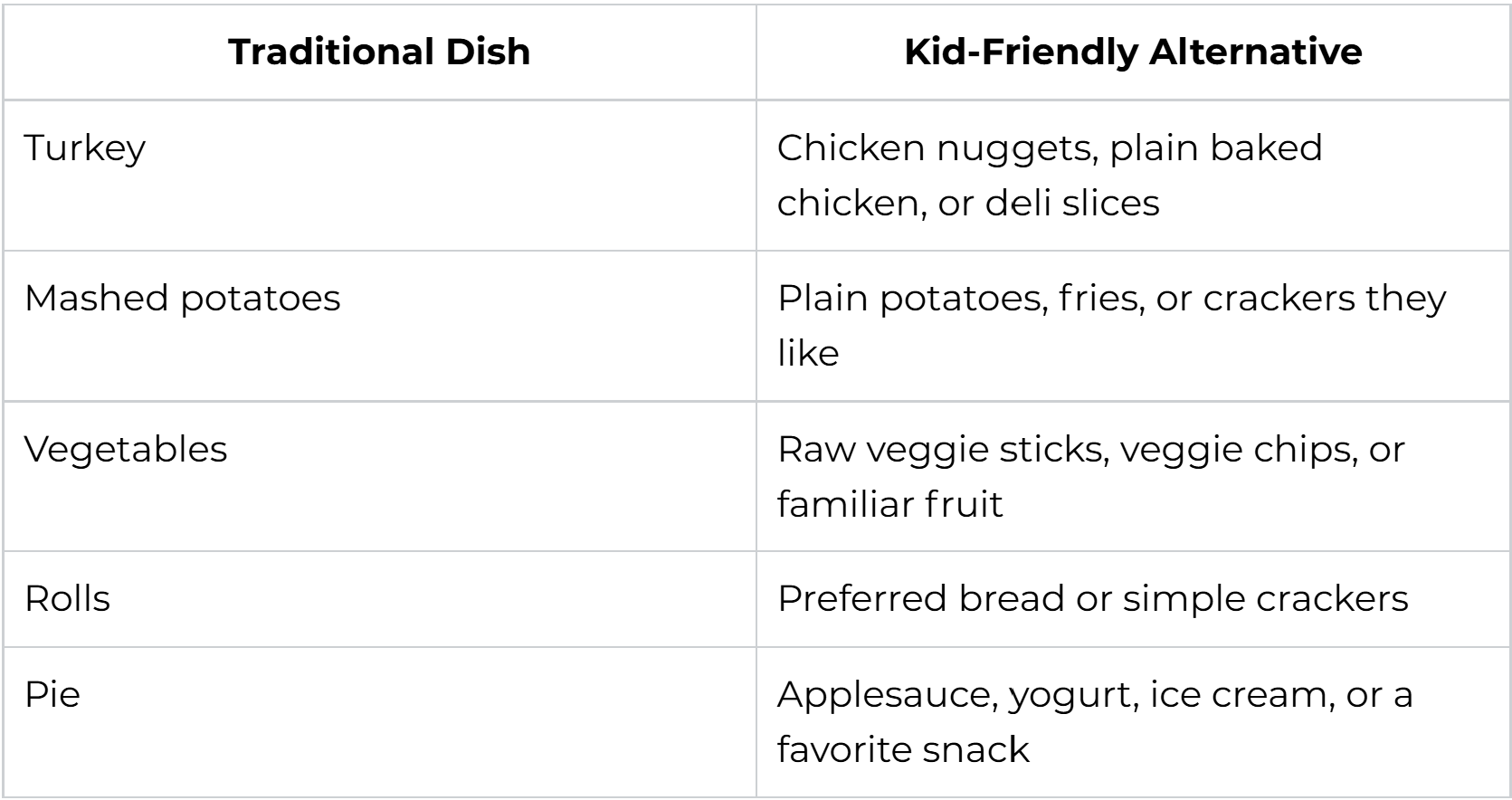
Here are simple swaps and additions that help kids feel included:
Offer Thanksgiving-inspired versions of safe foods:
Food Expansion Tips (Without Pressure)
Holiday time isn’t the time to push big eating changes, but you can plant gentle seeds. Small exposures over time build comfort. Think slow and steady.
Try:
Food exposure without expectation Let your child explore a new food with senses -look, smell, or touch, without needing to eat it.
Side-by-side foods Put one familiar food and one small “holiday-themed” food nearby. No pressure.
Let them help in the kitchen Kids feel more confident trying foods they help prepare — even if they don’t taste them yet.
Name new foods in fun ways Example: “Pumpkin cloud,” “Turkey bites,” “Crunchy carrots for strong muscles.”
Celebrate curiosity, not bites “Wow! You smelled it!” counts as progress.
Reassurance for Parents
You are not failing if your Thanksgiving table doesn't look like everyone else's, you are honoring your child’s needs and protecting their relationship with food.
The truth is:
Food challenges are real
Sensory needs are valid
Safety and comfort come first
Holidays are about connection, not battles over bites
Your child can enjoy Thanksgiving with their preferred foods and still feel included, loved, and celebrated.
And if you're working on expanding their diet, there’s plenty of time. Progress isn’t measured in holiday meals, it’s measured in patience, patterns, and support over time.
We’re Here to Support You
At R&R Collaborative Therapy Services, we understand that feeding challenges are emotional for kids and parents. We work with families to:
Build positive mealtime routines
Support sensory-friendly eating
Expand food variety slowly and confidently
Reduce stress around meals and holidays
If you’d like guidance, feeding support, or strategies tailored to your child, we’re here to help.
